


Zensei
ZENSEI is a wearable system designed to support people living with chronic peripheral neuropathic pain. Combining integrated electrical nerve stimulation, adaptive textile technology, and personalized interaction, it offers pain management that fits into everyday life.
Rather than requiring people to adapt their routines around treatment, ZENSEI is designed to make pain management accessible wherever and whenever it is needed.

THE CHALLENGE — RESEARCH & MOTIVATION
Chronic peripheral neuropathic pain results from damage or disease affecting the peripheral nervous system. It can manifest as burning, tingling, electric shocks, numbness, or heightened sensitivity, often affecting both legs and feet.
Its unpredictable nature reaches far beyond physical discomfort. When the intensity, location, and duration of pain constantly change, even simple activities can become difficult to plan. Over time, the anticipation of pain can be as limiting as the pain itself, leading people to withdraw from social activities and lose confidence in their ability to participate in everyday life.
The challenge is therefore not only to manage pain, but to address the loss of freedom that comes with it.
Research insights
Through literature research, interviews with affected individuals and healthcare professionals, and the analysis of patient experiences, three recurring design needs emerged.
-
Unpredictability
Pain can change in location, intensity, and character, requiring a solution that responds to individual needs rather than relying on fixed treatment routines.
-
Barriers to everyday use
Conventional TENS devices often depend on adhesive electrodes, external cables, and manual positioning, making discreet, comfortable use outside the home challenging.
-
Autonomy and participation
The fear of experiencing pain can discourage people from making plans or participating in social activities. Regaining a sense of control is therefore an essential part of the design challenge.


THE SOLUTION — COMPLETE WEARABLE

ZENSEI reimagines conventional TENS therapy as an integrated wearable system. By incorporating stimulation electrodes and conductive pathways into a body-adaptive textile structure, the concept aims to make pain management more discreet, accessible, and compatible with daily movement.
The system consists of two calf wraps with integrated electrode zones, connecting thigh straps, and a waist belt housing the central control unit. A companion app provides guidance for selecting and personalizing stimulation.
Designed to be worn beneath everyday clothing, ZENSEI combines the adaptability of performance textiles with the functionality of a therapeutic device, without adopting a conventional medical appearance.
The modular construction allows the wearable to be put on in individual steps. Wrap-on calf sections simplify positioning, while detachable connections link the textile components to the central control unit.
Once worn, the system is intended to remain ready for use, allowing stimulation to be activated when needed without repeatedly applying and repositioning individual electrodes.

PRODUCT DETAILS — TEXTILE, ELECTRODES & CONTROLS
Every element of ZENSEI is shaped by the demands of prolonged wear, sensitive skin, and unrestricted movement. Rather than treating technology and clothing as separate components, the design explores how both can be integrated into a single wearable system
Engineered for the body
The textile concept uses body-mapped knit structures with varying densities and elasticity. Flexible zones accommodate movement and different body shapes, while more stable structures provide support for integrated electronics and electrode positioning.
The result is a soft, breathable construction designed to maintain consistent skin contact without unnecessary bulk or restrictive seams.

Integrated stimulation
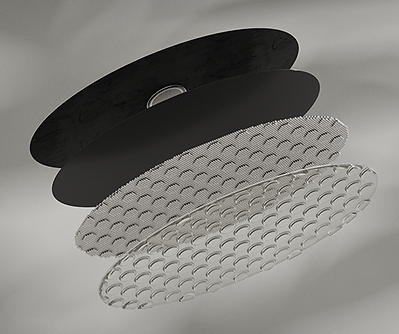
Removable dry conductive silicone electrodes are positioned within dedicated textile pockets. Unlike conventional adhesive TENS pads, this approach is intended to eliminate the need for repeated skin adhesion while supporting consistent electrode positioning.
Conductive pathways are incorporated into the wearable structure, connecting the electrodes to the stimulation unit without exposed cables running along the legs.
Control at your fingertips
A compact control unit sits at the front of the waist belt, functioning both as a technical interface and as a subtle design element.
Physical controls allow users to adjust stimulation intensity and switch between patterns without accessing their phone. The detachable module and removable electrodes also allow the remaining textile components to be washed.


ELECTRODE STRATEGY & APP
Targeted stimulation. Personalized to the individual.
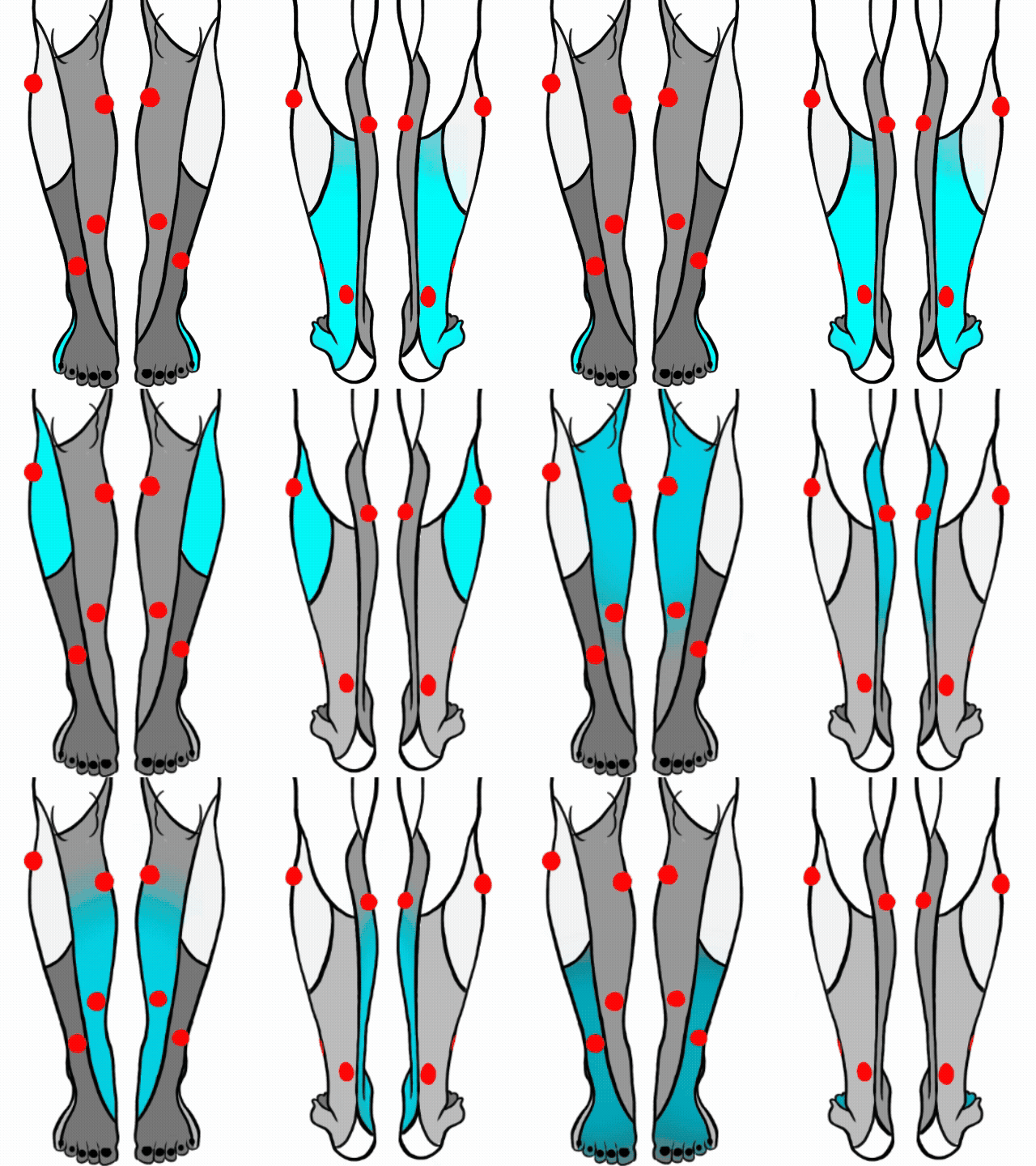
Neuropathic pain locations do not necessarily correspond to the most suitable point for electrical stimulation.
ZENSEI's electrode strategy draws on maps of cutaneous innervation, which identify areas of skin supplied by different peripheral nerves. Instead of asking users to manually locate and reposition individual electrodes, the system proposes fixed electrode zones and electronically selectable stimulation patterns.
Each calf wrap contains five electrode zones, with a maximum of two electrodes per leg intended to be active at any given time. Different combinations can be selected according to the user's reported symptoms and individual response.
This approach is designed to shift the complexity of electrode positioning away from the user and into the system.

Map pain
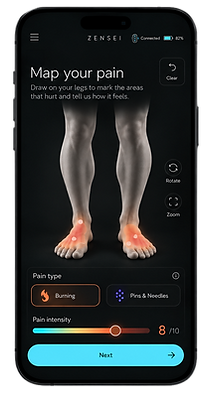
The user identifies the location, intensity, and character of their current pain by drawing directly onto a visual representation of the legs.
This intuitive interaction makes it possible to describe changing or difficult to verbalize sensations without navigating complex technical settings.
Targeted stimulation
Using the reported pain information, ZENSEI is designed to suggest suitable electrode combinations and stimulation patterns.
During use, the wearer can manually adjust intensity or switch between patterns using the physical control unit, maintaining immediate control without requiring continuous interaction with the app.
Personalize
After a session, the app collects simple feedback about perceived relief, comfort, and stimulation characteristics.
Over time, the proposed system would combine this feedback with sensor information, including movement, temperature, and skin contact, to progressively adapt stimulation to the individual.
The long-term aim is to reduce the amount of active input required from the user, making personalized pain management increasingly intuitive and effortless.


DESIGN DEVELOPMENT
From adaptability to simplicity.
The design process began with the question of how electrical nerve stimulation could accommodate pain that changes in location and intensity throughout the day.
Early concepts explored fully adjustable wearable structures, allowing electrodes to be repositioned across the legs. While offering considerable flexibility, these approaches introduced new challenges: complex positioning, inconsistent fit, and increased effort for users already experiencing pain or reduced sensitivity.
A central design decision emerged: rather than moving the electrodes, move the stimulation.
By integrating strategically positioned electrode zones into a continuous textile structure, ZENSEI aims to combine adaptability with a simpler and more reliable wearing experience.
Physical experimentation with textile structures, electrode integration, connections, and body fit informed the development of the wearable.
One significant refinement was the transition from a slip on calf sleeve to a wrap on construction. While the original concept offered a continuous textile surface, prototype testing revealed practical difficulties with putting on the garment and positioning the electrodes.
The revised wrap on design allows easier handling and more controlled placement, demonstrating how direct interaction with physical prototypes can challenge assumptions made during digital development.
The control unit was also refined to create a more discreet appearance, with simplified buttons and a form that visually integrates into the belt rather than resembling a conventional medical device.
